
Musti & Mirri – Improving the Online Pet Shopping Experience
Service Design / UX/UI / Customer Experience / May-August 2026
E-COMMERCE · PRODUCT DISCOVERY · UX/UI · CUSTOMER EXPERIENCE
Exploring how a pet e-commerce experience could better support discovery, choice and purchase.
Independent concept project.
PROJECT DETAILS
Role
Service Designer / UX Designer
Scope
Research · Concept Development · UX/UI
Tools
Claude · AI-assisted ideation
Musti & Mirri offers a broad range of products and services for pet owners. How could the digital experience make it even easier to find what is relevant to each pet and situation?
This self-initiated concept project explores opportunities to further develop the online shopping experience — from product discovery and recommendations to the customer experience beyond the purchase.
Rather than redesigning the existing service, I wanted to explore where small changes in context, guidance and personalisation could create additional value for pet owners.
What I Wanted to Understand
I wanted to look beyond the interface and understand the needs behind the shopping journey.
I focused on three questions:
1 Relevance
How can pet owners find products and services that are relevant to their pet and situation?
2 Decision-making
How could the service better support customers in choosing from a wide range of products?
3 Beyond the purchase
How could Musti & Mirri create value for customers beyond the individual purchase?
Research Approach
I explored the Musti & Mirri experience across digital and physical touchpoints, complemented by competitor research, my own shopping experiences and informal conversations with store staff.
Image: Unsplash
Image: UnsplashCompetitive Analysis
I reviewed a mix of US-based, European and Nordic pet retailers and brands to understand how different services approach product presentation, product discovery, customer engagement and the relationship beyond individual purchases.
US: Wild One · Fable · Bark · Chewy
Europe: Zooplus · VetZoo
Nordics: Arken Zoo · PetXL
Rather than comparing every service in the same way, I focused on a few patterns that were particularly relevant to the Musti & Mirri context.
Brand experience
Wild One — Strong visual identity and product presentation make the experience feel curated, calm and lifestyle-oriented.
Fable — A similarly polished experience. Real Pets adds customer photos and real-life product use, creating authenticity and social proof.
What I noticed:
Strong visual presentation and real-life context can make pet products feel more personal and desirable.
Product discovery & scale
Chewy · Zooplus · VetZoo · PetXL · Arken Zoo — Useful comparisons for large-scale pet e-commerce, where broad assortments need to remain accessible and easy to navigate.
What I noticed:
A broad assortment creates choice and convenience, but also increases the importance of helping customers understand what is relevant to them.
Beyond the individual purchase
Bark — BarkBox stood out through its recurring monthly subscription model, creating an ongoing relationship through curated products.
What I found interesting:
A subscription model creates a recurring reason for customers to engage with the brand.
Observing the Musti & Mirri Experience
The competitor review gave me a broader perspective. I then looked more closely at the Musti & Mirri experience across the online store, physical retail environment and customer services.
1 Online store
The online store has evolved into a more engaging and visually appealing experience, with a broad product selection and seasonal content supporting different shopping needs.
I focused on how products, recommendations and services are presented — and how the experience could better support customers in moving from browsing to finding something relevant.
2 Physical store
Visiting the physical store provided another perspective on how different pet categories are represented.
Dogs and cats naturally have the strongest presence, while products for smaller pets, birds and aquarium-related needs are less prominent within the overall environment.
This led me to consider how the digital experience could make relevant content and products easier to discover.
3 Services
Musti & Mirri's offering extends well beyond products, including veterinary services, grooming, training, physiotherapy and massage, nutrition advice, courses, nail trimming, remote veterinary services and in-store services.
I explored how these services are presented and how easily they can be discovered through the online store.
My first encounter with the service offering was through a carousel promoting wellbeing services. Clicking the content led to a product listing and eventually to a “page not found” message (1st screensaver).
I then found Services in the main navigation. From there, the offering was easier to access and understand. The “Book an appointment in store” view provided a clearer overview, although the amount of information and relatively small text made the service categories harder to scan (2nd screensaver).
One particularly interesting example was the free 30-minute first-puppy consultation, where a store employee helps a new puppy owner understand their individual needs and relevant products and services.
The service is currently presented as being available through one store in Lahti, which made me wonder:
Could this type of guided first-puppy experience create value in more locations?
I also noticed that service availability varies by location. For example, cat training services were not available in Helsinki when I explored the services available.
4 In-store expertise & personal service
My visits to Musti & Mirri stores highlighted another part of the experience that is difficult to replicate online: personal guidance and advice.
Customers can ask questions, get recommendations and discuss their pet's individual needs with staff. Employees also share experiences from products they have tried with their own pets, which can make recommendations feel more personal and trustworthy.
From my own background in customer service, I know that personal recommendations are not automatically objective or universally applicable. Their value comes from the conversation, context and relationship around them.
In my own experience, interactions at the Hakaniemi and Helsinki city centre stores have felt genuinely helpful and trustworthy. In Hakaniemi, the staff even recognise me and my dog when we visit.
A feeling that the customer — and their pet — are remembered and cared about.
The physical store experience showed me that Musti & Mirri's value is not only in its products and services, but also in the knowledge, guidance and personal relationships around them.
Screenshots from mustijamirri.fi, modified with Canva, showing two different paths to finding and booking services such as nail trimming.
Key Insights
Based on my observations and analysis, I identified three broader opportunities in the Musti & Mirri customer experience.
1 More choice needs more context
Musti & Mirri offers a broad range of products, services and expertise. The value of this selection depends on how easily customers can understand what is relevant to their own pet, situation and current need.
The challenge is not simply finding something to buy — it is knowing what is right for my pet.
This led me to look beyond product discovery and consider how the experience could better guide customers.
2 Valuable services and content need to be easier to discover
The service ecosystem already offers much more than products, from grooming and training to veterinary care, nutrition advice and courses. My review showed that the path to these services can vary, and some content is easier to discover than others.
Value only helps the customer when they can find it at the moment they need it.
This made me interested in how products, services and recommendations could be brought together around the customer's actual situation and need.
3 Personal relationships create value beyond the transaction
The physical store experience revealed something that is difficult to reproduce through a purely transactional online experience: knowledge, continuity and a sense of being remembered.
Staff can recommend products based on experience, understand the individual pet and build relationships with returning customers.
The customer relationship does not have to end when the purchase is completed.
This led me to explore how the digital experience could continue to provide value after checkout.
Image: UnsplashFrom Insight to Opportunity
The insights pointed towards three directions for further exploration.
1 From products to pet needs
More context
Helping customers connect products with their pet, situation and current need.
2 From promotion to relevant guidance
More relevance
Making useful content, recommendations and services easier to discover when they become relevant.
3 From transaction to ongoing value
More value beyond purchase
Exploring how the customer experience could continue after checkout, using existing purchase information as a foundation.
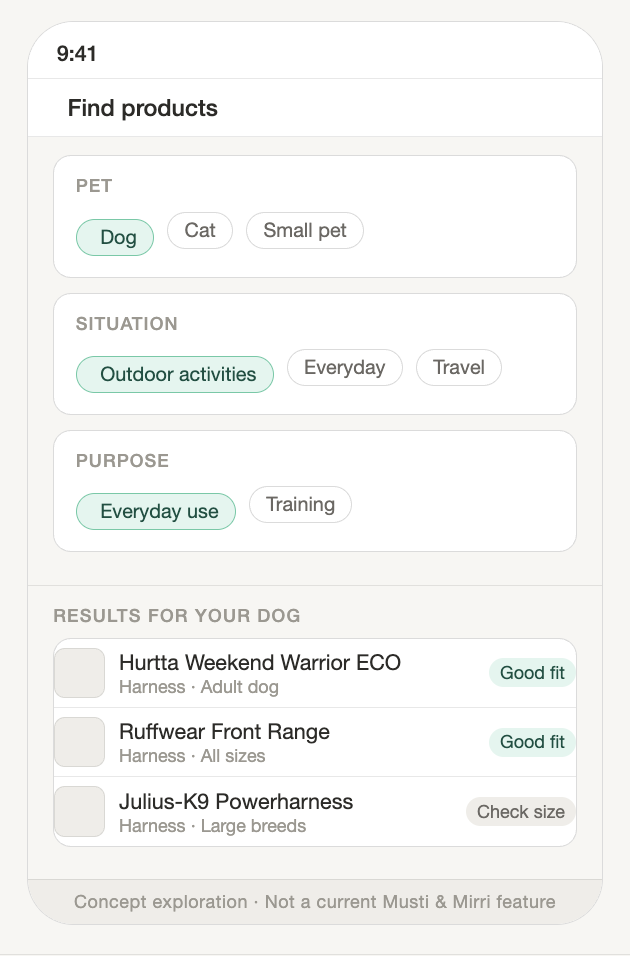
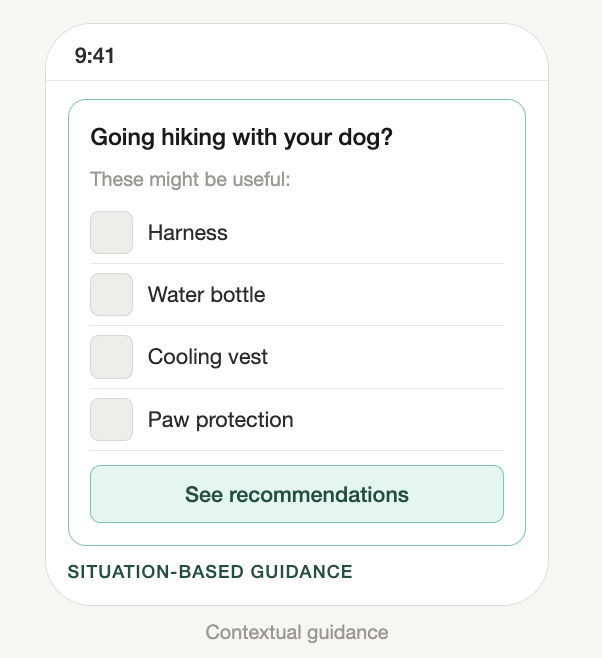
1 From products to pet needs2 From promotion to relevant guidance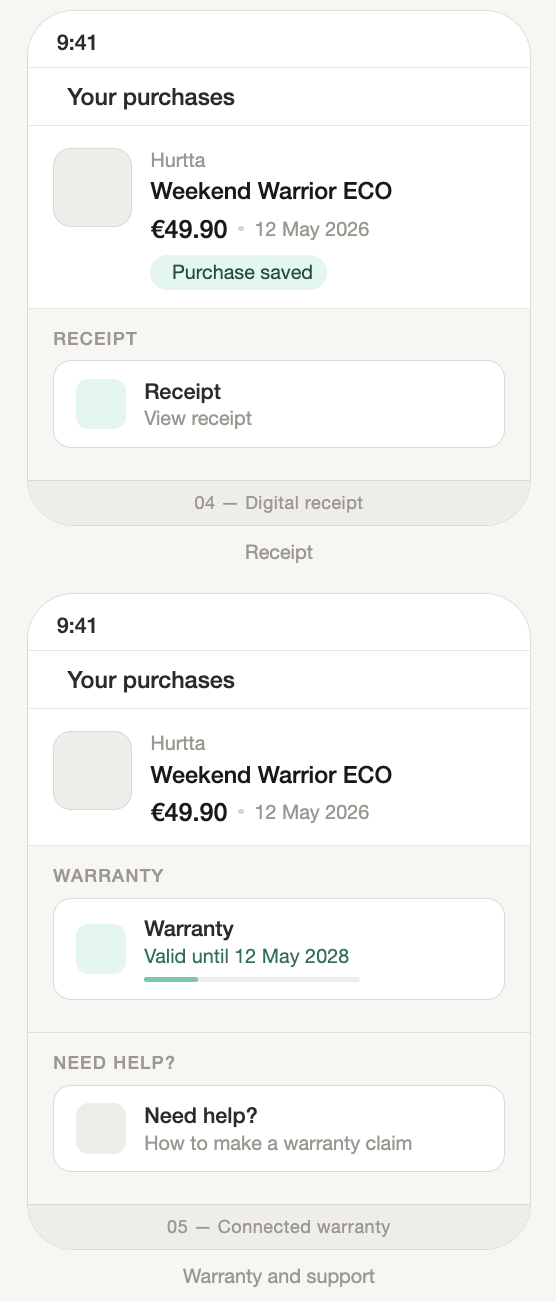
3 From transaction to ongoing valueAll three images concept design by me. Visualisation created with Claude.
From Product Discovery to Pet Needs
Musti & Mirri already uses situations and pet needs to make products more relevant — for example, seasonal content such as “Lenkkeile suojassa sateelta” connects a real-life situation with suitable products.
This made me consider how this approach could be developed further and used more consistently across the shopping experience.
Customers may start with a product category, but they may also arrive with a situation, question or specific need:
I’m getting my first puppy.
I’m going hiking with my dog.
My cat keeps scratching the sofa.
My dog is getting older.
These situations can involve more than a single product. They may connect products, services, advice and expertise that currently appear in different parts of the experience.
What if the experience could connect these needs more deeply?
Instead of replacing traditional product categories, the opportunity would be to add another layer of discovery:
Pet + situation + need
↓
Relevant products + services + guidance
For example:
Getting your first puppy
→ Food
→ Harness & leash
→ Toys
→ Training
→ Nutrition advice
→ First-puppy consultation
The opportunity is not to replace product-led shopping, but to make the connection between a pet owner's situation and Musti & Mirri's existing products, services and expertise more visible.
Existing example: situation-based product discovery. Screenshot: Musti & Mirri online store, mustijamirri.fi.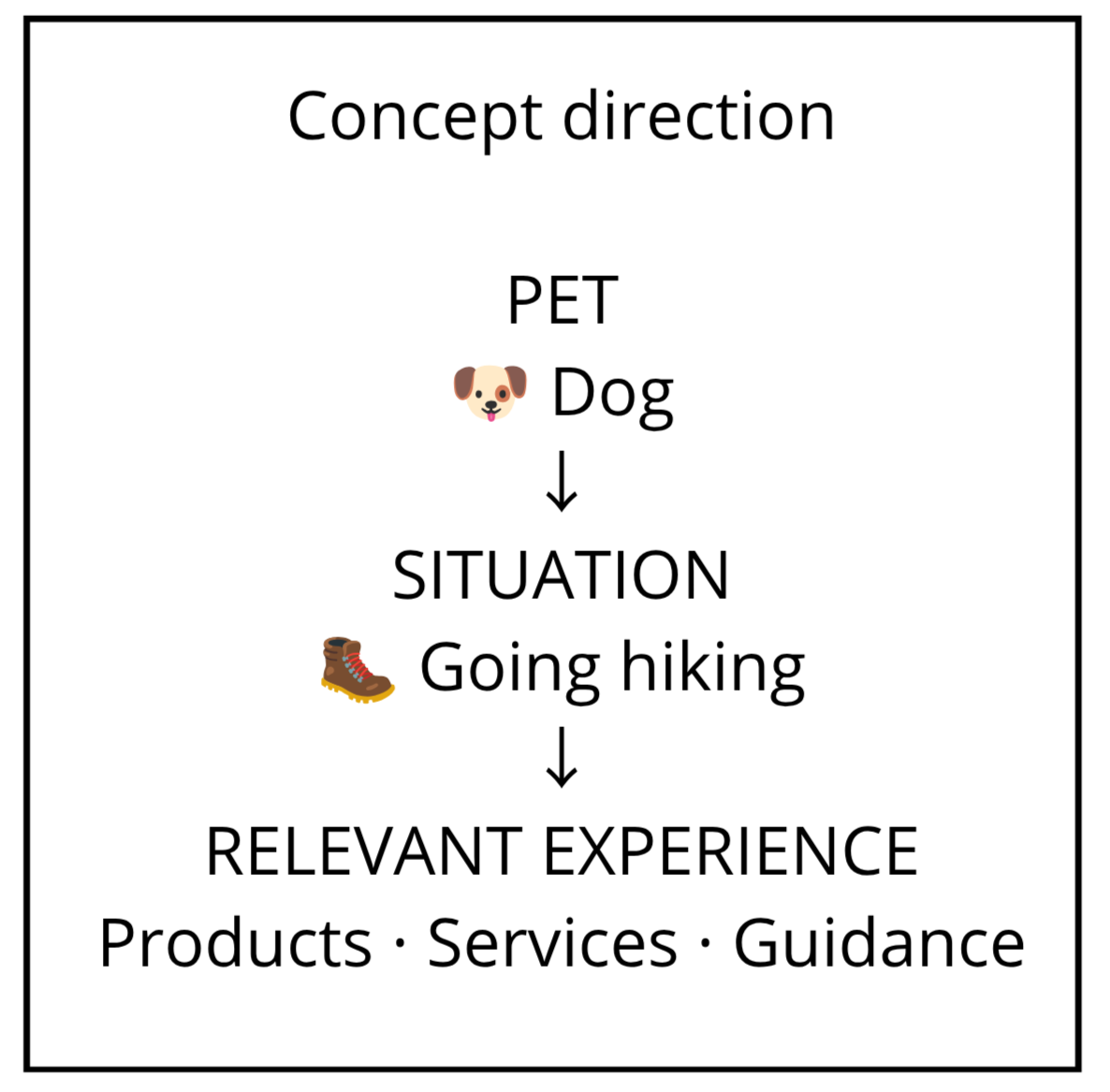
Image created with Canva.Existing example: Musti & Mirri customer account.
Screenshot: Musti & Mirri online store, mustijamirri.fi.From Customer Account to Pet-Centric Experience
Musti & Mirri already has a personal customer account where customers can add their pets, view purchase history and access services.
Rather than creating new account functionality, I explored how the existing customer account could become a more useful part of the relationship between the customer, their pet and Musti & Mirri.
What could be developed further?
Personal recommendations
Explore how the customer's existing pet and purchase information could be used to provide more relevant product recommendations.
2. Personal offers
Musti & Mirri already communicates offers to customers by email. I received offers that appeared similar to those from Petenkoiratarvike, another brand within the same group. This made me consider whether offers could be made more visibly relevant to the individual customer's pet and needs.
Relevant services
Surface services that may be useful for the customer's pet alongside products and recommendations.
Digital receipt & warranty
Extend purchase information with a digital receipt, product details and warranty information connected to the purchased product.
From existing customer data to a more useful experience
My pet + My purchases
↓
Relevant recommendations + Personal offers + Services
↓
Purchase → Product → Receipt → Warranty
The opportunity is not to create another account feature, but to make the existing customer information more useful throughout the relationship with their pet.
Concept design by me. Visualisation created with Claude.From Customer Account to Personalised Experience
Musti & Mirri already has a personal customer account where customers can add their pets, view their purchase history and access services.
This existing customer information creates an opportunity to make the account more useful — not by adding another profile feature, but by using the information already connected to the customer to make the experience more relevant.
What could become more personalised?
Recommendations
Products could be recommended based on the customer's pet, previous purchases and current needs.
Offers
Existing customer communication could potentially become more individually relevant by connecting offers more clearly to the customer's pet and shopping behaviour.
Services
Relevant services could be surfaced alongside products and recommendations based on the customer's pet and situation.
Receipt & warranty
Purchase information could be extended with a digital receipt, product details and warranty information connected to the purchased product.
A familiar model from retail
In other retail experiences, personalisation can already be very specific. For example, the K-Ruoka app provides weekly offers based on individual purchase behaviour.
This made me consider what a similar approach could mean in pet retail:
What if purchase history could help Musti & Mirri create more relevant monthly offers — based not only on what customers have bought, but on what their pet might need next?
Image: UnsplashLooking beyond the moment of purchase raised another question:
What if the purchase didn't end at checkout?
Musti & Mirri already provides access to purchase history and digital receipts through the customer account. I was interested in what could be added to this existing purchase information to make it more useful after the transaction.
Some products remain relevant long after they are purchased. They may need care, replacement or warranty support, and customers may need to return to information about the product months or even years later.
This led me to explore:
Rather than creating a separate service, I explored how existing purchase information could provide more value after the transaction.
Could the existing purchase record become a more useful product record — connecting the product with warranty information and support?
Image: UnsplashFrom Receipt to Warranty
The most interesting opportunity I identified was to extend the existing purchase information with warranty details.
A customer may know that a product is under warranty, but finding the relevant information when something goes wrong can still require searching through different sources.
What if the warranty were directly connected to the product and its existing purchase record?
Warranty
Hurtta Weekend Warrior ECO
Purchased
12 May 2026 · €49.90
Warranty
Valid until 12 May 2028
Need help?
How to make a warranty claim
View receipt
Instead of treating the warranty as a separate document, it becomes part of the product record the customer can return to when needed.
Concept design by me. Visualisation created with Claude.Reflection & Key Learnings
This project reinforced for me that improving an e-commerce experience is not necessarily about adding more information or changing the existing interface.
1 More choice needs more context
A broad product selection is valuable, but customers may need help understanding what is relevant to their own pet and situation.
2 Existing strengths can become opportunities
Some of the most interesting design opportunities emerged from things Musti & Mirri already does — from situation-based content and a personal customer account to its broad range of services and in-store expertise.
3 The customer journey continues beyond the interface
Looking beyond the shopping journey revealed opportunities not only in product discovery, but also in the relationship with the customer after the purchase.
4 Good e-commerce supports decisions, not just transactions
A useful shopping experience should help customers understand what they need, why it is relevant and what to do next— while continuing to provide value when they return to a previous purchase
Image: Unsplash